


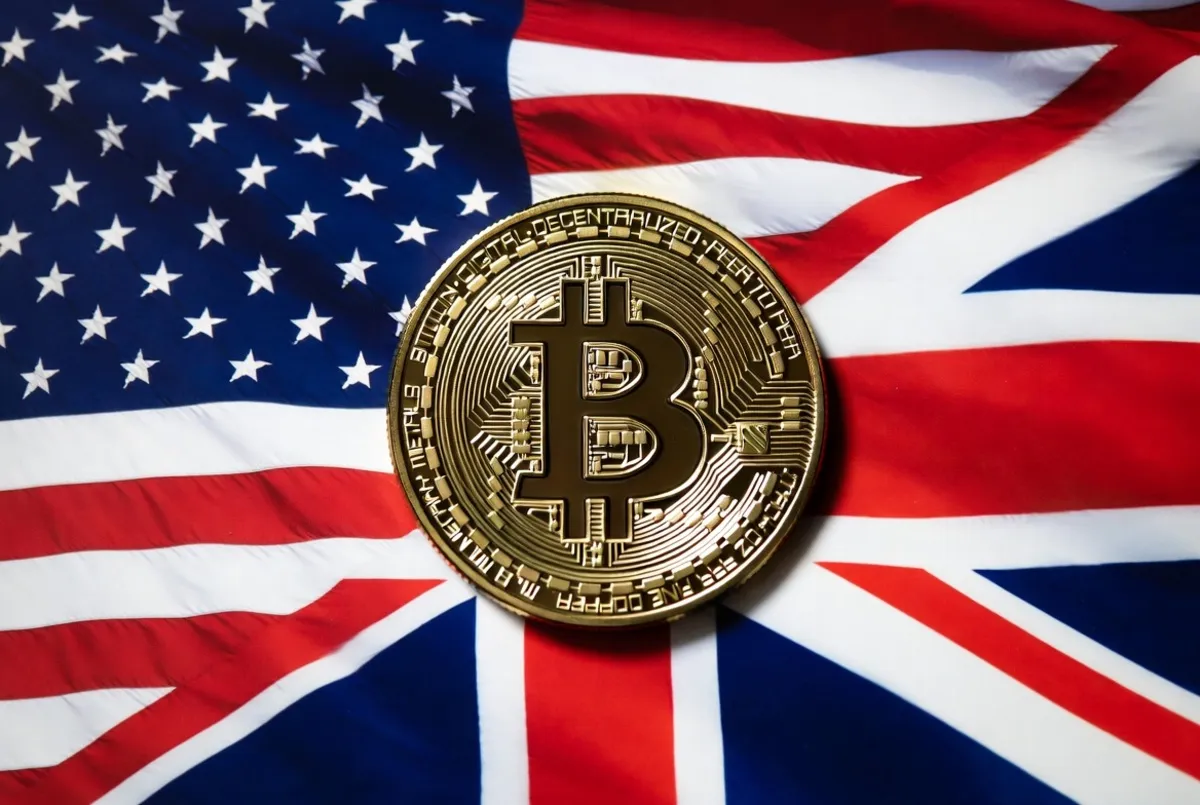
On April 21, a US combatant commander told the Senate that Bitcoin is a tool for American power projection. The UK held 61,000 BTC in its seized asset register the same week and had no policy. The gap is not accidental.
On April 21, 2026, Admiral Samuel Paparo - Commander of the United States Indo-Pacific Command, the most senior US military officer responsible for the China theatre - sat before the Senate Armed Services Committee and called Bitcoin a tool for American "power projection." He described it as a "peer-to-peer, zero-trust transfer of value" with "incredible potential as a computer science tool" and "really important computer science applications for cybersecurity." It was, according to the Bitcoin Policy Institute, the first time a combatant commander had publicly characterised Bitcoin as a national security asset in congressional testimony.
The context matters. The hearing examined US strategic posture in the Indo-Pacific - China's military expansion, North Korean threats, the Taiwan Strait. Bitcoin was not on the advertised agenda. Senator Tommy Tuberville raised it directly, noting that the CCP's own monetary research institute had published analysis on Bitcoin as a strategic asset. Paparo's answer was not a hedge. It was doctrine: anything that supports all instruments of national power for the United States is, in his words, "to the good."
Three layers, assembled in sequence.
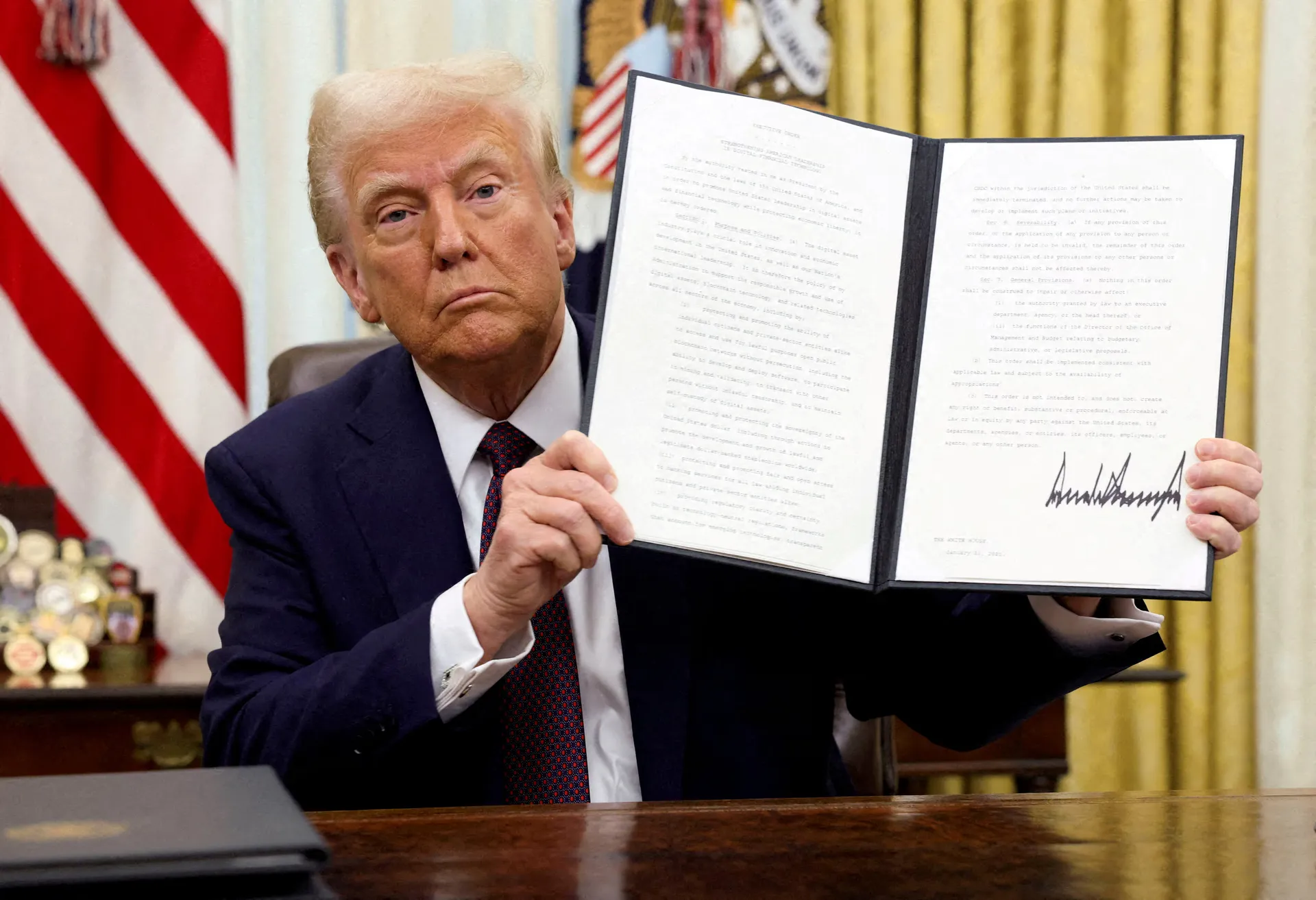
The first was executive. On March 6, 2025, President Trump signed the order establishing the Strategic Bitcoin Reserve, formalising US federal policy on Bitcoin held across law enforcement wallets. The purpose was explicit: the United States had not implemented a policy to maximise Bitcoin's strategic position as a store of value. That was going to change. The order prohibited sale. Bitcoin placed in the reserve would not be liquidated - converting a legacy practice of auctioning seized assets into the sovereign-asset treatment applied to gold.
The second was legislative. On March 11, 2025, Senator Cynthia Lummis reintroduced the BITCOIN Act - Boosting Innovation, Technology and Competitiveness through Optimised Investment Nationwide - in the US Senate. The bill directed the Treasury to purchase one million Bitcoin over five years and hold that position for a minimum of twenty years, stored in a decentralised network of secure facilities across the country. Proof-of-reserve audits would publish holdings quarterly. Financing would draw, in part, from the appreciation in Federal Reserve gold certificates - repurposing legacy monetary infrastructure to acquire Bitcoin. The bill remains in committee.
The third was security doctrine. Paparo's April 2026 testimony placed Bitcoin inside INDOPACOM's own strategic vocabulary - the command built around information superiority, zero-trust architecture, and denying China's objectives. The CCP's think tanks are studying Bitcoin as a strategic instrument. Paparo said so from a Senate chamber.
Three layers: sovereign reserve, legislative mandate, military doctrine. The US is building a national architecture with the aim to dominate in a multipolar world.
Against that backdrop, consider what the United Kingdom is doing with the 61,000 Bitcoin sitting in its seized asset register - the product of the Jian Wen money laundering case, linked to a $5 billion Chinese investment fraud that stripped roughly 130,000 victims between 2014 and 2017. At current prices, that holding sits somewhere between £4 and £5 billion. It makes the UK the world's third-largest nation-state Bitcoin holder, behind only the United States and China.
The government's policy on this holding is, functionally, to have no policy. Freddie New spent years as Chief Policy Officer of Bitcoin Policy UK in direct engagement with HM Treasury and successive City Ministers, raising the same question each time: what does the government intend to do with its Bitcoin? The answer was consistent across five ministers. "Bitcoin is not viewed by the government as an asset suitable to form part of our reserves," New told BitcoinTreasuries.Net "It's unstable, volatile, and isn't going to be included within our treasury reserves at all."
New was direct about what that consistency signals: "Bluntly, at the moment, the government completely ignores Bitcoin and doesn't regard it as a valuable asset at all."
In Washington, a four-star admiral is explaining proof-of-work's asymmetric cost imposition on adversaries to the Senate Armed Services Committee. In London, five consecutive City Ministers have issued the same three-word dismissal - volatile, unstable, unsuitable - without engaging with the argument. On the retail access question, the UK did move. The FCA lifted its ban on retail access to crypto exchange-traded notes in October 2025 - four years after the US approved spot Bitcoin ETFs. Pressure from international competitive dynamics changed the position. And what resulted was not a Bitcoin ETF. It was a crypto ETN - a debt instrument - with the ban on crypto derivatives still in place.
Progress, technically. Leadership, it is not.
New's diagnosis is not primarily regulatory. It is cultural.
"I think this is another example of the UK being very, very snooty and dismissive of new things," he said, "which is an unfortunate national characteristic." He drew the parallel with mobile phones - a generation of British comedians built careers mocking people for using them. The internet received the same treatment. "We have developers like Adam Back and a proud history of computing and cryptography in this country," New said, "which is then used by other people to do wonderful things while we sneer at them."
The Adam Back point carries specific weight. The British cryptographer whose Hashcash work underpins Bitcoin's proof-of-work mechanism is one of the most significant technical figures in the protocol's history. The UK producing the intellectual infrastructure and exporting the application is an unfortunate repeating occurence.
The growing cluster of UK-listed Bitcoin treasury companies - The Smarter Web Company, B HODL, Stack BTC, Falcon Edge among them - represents the grassroots correction the government has not provided. New has been clear about the political logic: "A delegation of five or six different listed companies turning up at Downing Street is much more powerful than just one on its own." At a moment when UK capital markets are searching for growth narratives, Bitcoin treasury companies have produced genuine IPO volume on both AQSE and the LSE. "This is an industry sector that they should be getting behind," New said. The Smarter Web Company made the point more concretely in February 2026, uplisting from Aquis to the LSE Main Market and earning inclusion in the FTSE All-Share and FTSE SmallCap indices by March - a Bitcoin treasury company embedded in the fabric of British public markets, while the government that oversees those markets maintains that Bitcoin has no value worth recognising.
There are signs the political weather is shifting as Reform UK, currently leading in national polls ahead of a general election that must be held no later than 2029, has put Bitcoin explicitly inside its policy platform. At the Bitcoin 2025 conference in Las Vegas, Nigel Farage pledged to introduce a Crypto Assets and Digital Finance Bill if Reform comes to government: a Bitcoin digital reserve at the Bank of England, capital gains tax on crypto cut from 24% to 10%, and legislation prohibiting banks from debanking customers for crypto activity. Reform became the first UK political party to accept Bitcoin donations. The Labour government's response was to commission an urgent review into crypto political financing. The Rycroft Review reported in March 2026. Its recommendation - an immediate moratorium on crypto political donations - was implemented the same day. Whatever one makes of Reform's broader politics, their Bitcoin position is the first signal from a major UK political force that the country's approach is not just inadequate, but a liability. That a government's instinct was to restrict rather than engage tells you everything about where the current administration's priors sit.
The practical consequence of the UK's position is being set by markets the government cannot control. UK gilts are under sustained pressure - the 10-year at 5.1%, the 30-year at 5.79%, both at multi-decade highs. New had called the onset of a sovereign debt crisis in August 2025. Those yield levels now validate that read. The signal from bond markets is unambiguous: long-term creditors do not regard the UK as a creditworthy borrower over a thirty-year horizon.
When the Jian Wen legal process concludes and the government takes formal ownership of its 61,000 Bitcoin, the Proceeds of Crime Act governs what happens next. Victims are compensated first - but they lost Chinese yuan in 2014, not Bitcoin, which means some portion of the holding must be liquidated to service fiat-denominated claims. A diplomatic complication sits in the background: the Chinese government is reportedly lobbying to receive its share as Bitcoin rather than fiat. There is no evidence the UK is equipped to navigate that with strategic intent.

What remains after victim compensation is split between the Home Office and law enforcement. At current prices, the law enforcement share alone exceeds the Metropolitan Police's entire annual budget. New is direct about the likely outcome: "A Labour government would probably sell it, which, in retrospect, will look like a silly decision. But bear in mind, these are dealing with people who don't think Bitcoin has any value at all."
Gordon Brown sold 400 tonnes of gold between 1999 and 2002 at an average of $275 per ounce. Germany liquidated approximately 50,000 Bitcoin seized from a piracy operation in mid-2024, banking around $2.8 billion in a transaction that has since cost the German taxpayer many multiples of that figure in unrealised appreciation. Both decisions were made by governments that did not understand what they were holding.
The US is building a reserve. Britain is building a case study.
Freddie New is CEO of B HODL and a former head of Bitcoin Policy UK. Quotes are drawn from an interview with BitcoinTreasuries.net conducted May 6, 2026.
Want more bitcoin treasury coverage in your search results? Add Bitcoin Treasuries as a preferred source on Google.