
Metaplanet Sells Bitcoin for the First Time, Then Buys It Right Back



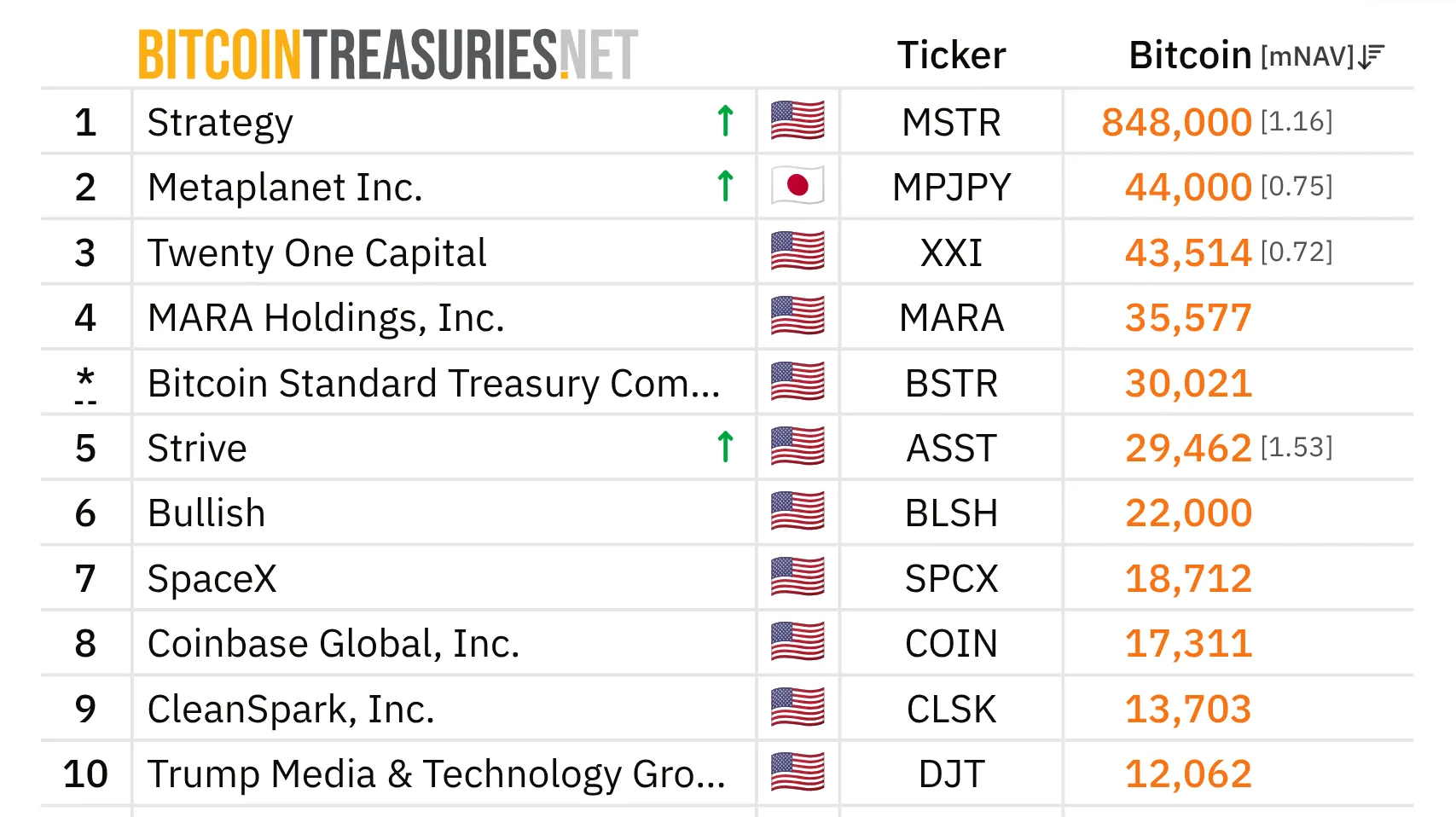
Metaplanet sold 10,000 Bitcoin in the third quarter and bought back 11,000, a round trip the Tokyo-listed company says was meant to show credit rating agencies that its reserves can be turned into cash. The net purchase of 1,000 Bitcoin took holdings to 44,000 as of September 30. Chief Executive Simon Gerovich said that stack now makes Metaplanet the second-largest listed Bitcoin treasury company in the world, behind Strategy.
In a Tokyo Stock Exchange filing dated October 5, Metaplanet said it sold the 10,000 Bitcoin at an average of ¥12,470,098, for aggregate proceeds of ¥124.7 billion. The reacquisition was done at a higher average price, which the company attributed to the rise in Bitcoin between the two trades. Coverage of the filing put the buyback near ¥13.63 million per Bitcoin, about 9% above the sale. On the 10,000 Bitcoin that were replaced, the gap is about ¥11.6 billion, roughly $73 million to $80 million depending on the yen rate.
The debts the sale was sized against were not repaid. Metaplanet said the Bitcoin sold exceeded the outstanding principal of its bonds, borrowings and other interest-bearing liabilities. At September 30, bonds, borrowings and preferred shares, net of cash and dollar stablecoins, stood at ¥122.4 billion. The liabilities remain outstanding on their existing terms. The cash was held, then used to buy more Bitcoin than had been sold.
Gerovich posted the update on X the same morning. "Rating agencies and credit investors ask one question of a Bitcoin company: can that Bitcoin be turned into cash to meet obligations, and will it be?" he wrote. "We answered by doing it." Net, he said, Metaplanet added 1,000 Bitcoin, and the 44,000 Bitcoin on the books put it second among listed treasury companies.
Why the company sold Bitcoin it meant to keep
The filing is direct about the audience. Metaplanet pointed to a published rating of an unnamed overseas peer in which reluctance to sell Bitcoin, or a policy of not selling it, was treated as a reason to give the asset less weight in a credit assessment. Stating that the Bitcoin could be sold was not enough, the company said. It wanted an actual sale on the record.
The peer is not named. The only listed Bitcoin treasury with a published issuer rating is Strategy, which S&P rated B− in October 2025, citing thin dollar liquidity among its concerns. Strategy has since approved a framework allowing up to $1.25 billion of Bitcoin sales for reserves, dividends and buybacks, and by August had sold 6,948 Bitcoin for about $432.5 million. Strategy's own holdings, disclosed this week at 848,000 Bitcoin, remain an order of magnitude larger than Metaplanet's.
Metaplanet said the transaction was not a change in holding policy. The stated aim is narrower: show willingness to monetize a portion of the stack when obligations or capital management require it, then use that record to seek a rating and broader access to bonds and preferred shares. The filing says there is no assurance a rating is obtained, or of its level, timing or terms. The longer aim, Gerovich wrote, is a Bitcoin financial institution in Asia, not a pure accumulation vehicle.
The same disclosures revise capital allocation. For the first time, up to 15% of assets can sit outside Bitcoin. The company is launching what it calls a Net Interest Income Strategy, meant to produce recurring income and lower the effective cost of capital. Bitcoin income-generation revenue has now been booked for eight consecutive quarters.
The tax asset, and what it does not yet do
The Bitcoin sold had been acquired above the sale price, so the disposal produced a capital loss for U.S. tax purposes at subsidiaries of Metaplanet's U.S. holding company. The company estimates a deferred tax asset of about $97 million. It says that if the asset is recognized, it could offset all or part of the price gap and the transaction costs.
That figure is preliminary. The filing says recognition and amount will be settled after financial closing and the auditor's review, and that the asset may not be recognized at all. Use of any loss carryforward also depends on future capital gains. Because Metaplanet carries Bitcoin at fair value, the sale does not by itself create a new accounting loss.
Total holdings of 44,000 Bitcoin were carried at an aggregate cost of ¥684.5 billion, or ¥15,555,717 per Bitcoin. Bitcoin per fully diluted share was 0.0293312. The company reported a quarterly Bitcoin yield of 11.3%. The net addition of 1,000 Bitcoin is a sharp slowdown from the 2,823 added in the second quarter, but it is the purchase that, on the company's account, moved Metaplanet into second place among listed treasury companies.
What shareholders objected to
HODL15Capital called Gerovich's post "the most misleading financial update put out by any company CEO." The account said common shareholders lost roughly $73 million on the sale and buyback, and that the figure was not in the announcement. "Board members, most of whom hold zero shares, did not lose any money," the post said, arguing that insiders can still acquire large blocks for a few yen a share. It called the omission "borderline professional malpractice" for a company that talks about transparency, and asked director Shinpei for the full details.
The complaint lands on top of a fight that is only weeks old. On September 11 the board cut the Series 10 executive option pool by about 41%, to 188.2 million potential shares, after criticism that a 20% fully diluted target had expanded management's claim with every raise. Gerovich had already exercised rights into about 64 million shares at ¥10. The company says that exercise was valid and will not be unwound. Several independent directors appear to hold no stock. A buyback authorization of up to 150 million shares, or ¥75 billion, was unused through September.
Replies under Gerovich's update returned to the same point. One holder said raising the Bitcoin count while mNAV per share falls does not answer the market. Another said 44,000 Bitcoin is not a result to celebrate against guidance of 100,000.
What is settled, and what is not
The sale happened. The proceeds exceeded the interest-bearing debt but were not used to retire it, and the stack ended the quarter 1,000 Bitcoin larger, with the replacement coins costing more than those sold. A rating is an intention in the filing, not a request on the record, and the $97 million tax asset is an estimate.
That leaves the trade as a demonstration with a known price and an unproven payoff. If a rating follows and yen funding cheapens by more than the gap, the filing will read the way the company described it. If not, the ¥11.6 billion was a cost borne by common shareholders to make a point to agencies that have yet to respond publicly.
Want more bitcoin treasury coverage in your search results? Add Bitcoin Treasuries as a preferred source on Google.